
In this guide
Key Takeaways:
- A sediment dewatering bag lets pumped water pass through its fabric while trapping some sediment from excavations, trenches, or basin cleanouts.
- Fine clay may pass through, and the bag won’t remove dissolved chemicals, fuel, or oil.
- Place the bag on stable ground, route the water safely, and add another treatment step if your project requirements call for it.
A sediment dewatering bag is a temporary way to filter dirty pumped water from construction sites. It acts like a trap to filter sediment like loose soil and sand that could clog storm drains, harm streams, and create trouble with regulators.
What sediment dewatering bags are made of
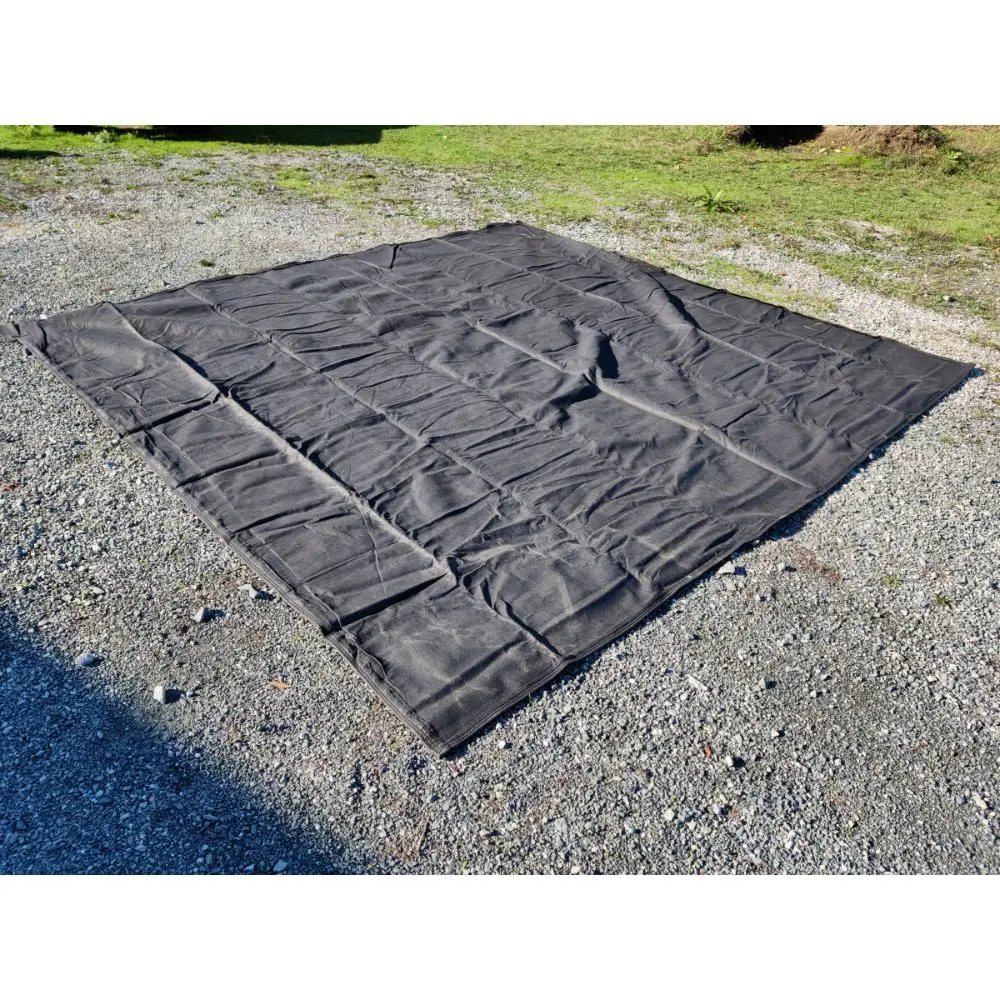
A sediment dewatering bag is a large bag made from geotextile. Geotextile is a tough fabric built for construction use. Unlike standard plastic or woven fabric, geotextile is engineered with permittivity (or high “flow rate”)— highly passable for water to exit quickly without turning it into an unmanageable water balloon.
This is unique, because even though it's highly permeable, soil particles cannot exit its pores. Only water can. This makes this material ideal for trapping sediments like loose soil and clay.
4 effective ways to use sediment dewatering bags on site
1. Filter water pumped from a trench or excavation
When groundwater or rainwater collects in an active excavation, a pump can send it into a sediment dewatering bag. The bag then traps some of the sediment before the water flows away, helping your crews keep muddy discharge from spreading across the work area.
2. Help during sediment basin cleanout
When a basin or trap needs to be drained so crews can remove accumulated sediment or complete maintenance, a dewatering bag can capture some of the solids (or “sediments”) carried from the pumped water. This makes discharge easier to manage while keeping the work moving.
3. Provide a temporary treatment for an active construction excavation or maintenance work
Since a sediment filter bag is portable, it can be set up near a pump and hose without needing a lot of space. This makes these bags usefully ideal for localized dewatering where a large settling pond or tank is not practical.
NOTE: Although portable, you still need a stable placement area and enough room to collect and handle the sediment-filled bag.
4. Reduce sediment before water reaches another control for secondary water treatment step
Geotextile fabric, while highly permeable, is not a one-step guarantee to sediment-free water. Very fine silt and colloidal clay particles can still pass through its pores.
Or in some project cases near fish habitat, discharge permit sets required NTU target and monitoring. Extra treatment is then needed if bag effluent remains visibly turbid or fails to meet permit criteria.
Common approach is to direct the water leaving the bag to a sediment basin, vegetated area, rock filter, or other approved control for further treatment.
What sediment dewatering bags CAN’T do
Reliably remove very fine clay
Fine clay particles are tiny. In a common sediment-size classification, clay-sized particles are smaller than 0.002 mm (2 micrometers). These individual particles are much smaller than sand and many silt particles, which sediment dewatering bags are better at capturing. Some clay can pass through a dewatering bag’s geotextile fabric or stay suspended in the water, leaving it cloudy (or “turbid”).
Remove dissolved chemicals, fuels, or oils
A dewatering bag is designed to capture sediment. But more than loose soil and sand, it cannot fully filter hydrocarbons like dissolved chemicals, fuel, or oil from water.
If pumped water has a fuel sheen or may contain industrial chemicals, it can remain contaminated even after filtration. Appropriate oil and grease controls according to individual permit requirements are expected when these pollutants are present.
Compensate for poor setup or excessive flow
An undersized bag or excessive flow can cause slow drainage, bypass, or damage.
Place the bag on stable, level ground, match it to the pump flow, and inspect it while pumping. If water bypasses the fabric or the bag bulges or tears, stop pumping and fix the setup before restarting.
TigerFloc sediment dewatering bag options for larger site water projects
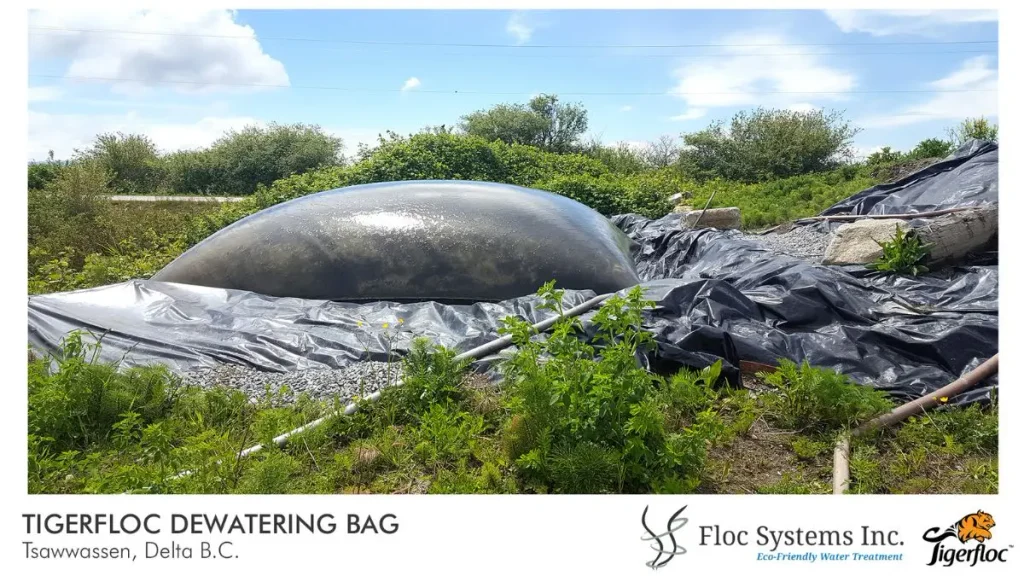
For commercial, agricultural, and industrial jobs, the right bag setup depends on the water, flow, and space available. TigerFloc Sediment Dewatering Bag uses durable, micro-pored fabric designed to balance sediment filtration with water flow.
If fine suspended particles may pass through the bag, TigerFloc belts or socks can be used as part of the treatment setup. The flocculant helps particles bind into larger clumps, or “flocs,” which can then settle or be captured during filtration.
The bags come in three sizes—14′ × 14′, 14′ × 7.5′, and 7.5′ × 7.5′. To choose a setup, consider your expected water volume and flow, available site space, and discharge or reuse requirements.
DISCLAIMER: TigerFloc does not guarantee specific NTU or TSS results. Treated water must be checked against project requirements.
Use sediment dewatering bags as part of a complete treatment plan
Sediment dewatering bags give construction projects a portable way to manage water pumped from excavations and sediment basins. They can capture sand, silt, and other particles as water passes through the geotextile, and they can provide a useful first treatment step when space is limited.
The bag’s performance depends on the sediment, flow rate, placement, and condition of the fabric. Fine clay or other contaminants may need additional treatment, so inspect the outlet and check the water against your project’s discharge or reuse requirements. With the right setup, a dewatering bag can help control sediment while keeping site work moving.
FAQ
Where should I place a dewatering bag?
Place it on stable, level ground where the outlet can drain safely. Direct the outlet to a suitable secondary control, such as a sediment basin or vegetated area, if required by your site plan or permit.
How do I choose the right dewatering bag size?
Consider the expected pump flow, water volume, sediment load, and available space. Follow the manufacturer’s sizing guidance or ask the supplier to help match a bag to the project.
What should I do with a full sediment bag?
Follow the manufacturer’s disposal instructions and your site’s permit and waste rules. For example, sediment from a routine trench may follow your project’s usual disposal plan once it’s confirmed suitable. But if the trench is near a former fuel tank, equipment yard, or known spill, don’t assume the sediment is clean because it looks like soil. Ask your environmental lead whether it needs testing and special handling before disposal. If contamination is possible, check whether the collected sediment needs testing or special handling.
0 Comments