
Key Takeaways
- Peak construction and industrial activity drives sharp spikes in water demand, and trucking in fresh water raises both cost and scheduling risk.
- Sediment-laden site water can be clarified and reused for non-potable tasks such as dust control, compaction, and equipment washing, which lowers freshwater draw.
- TigerFloc, a natural flocculant, has dropped turbidity from about 500 NTU to 8 NTU within minutes and reduced suspended solids from roughly 200 PPM to 10-15 PPM in testing.
- On-site reuse of treated water reduces discharge frequency and supports compliance with Canadian water regulations.
- TigerFloc products ship from Surrey, Canada and are available throughout Canada and the United States.
Construction and industrial projects rarely use water evenly. During peak activity, dust control, compaction, trenching, equipment washing, and material processing all draw on the same supply at once. Sourcing that volume as fresh water is expensive, and in remote or dry regions it can stall a schedule. Treated water offers a practical alternative: clarify the sediment-laden water your site already produces and put it back to work. With a natural flocculant such as TigerFloc, crews can reduce freshwater demand, keep turbidity within regulated limits, and hold their timelines. This article explains how on-site reuse works and where it delivers the clearest cost and compliance gains.
Freshwater Sourcing vs. On-Site Treated Water Reuse: At a Glance
| Factor | Trucked-in or municipal freshwater | Trucked-in or municipal freshwater |
|---|---|---|
| Cost per volume during peak demand | High, and volatile | Lower, using water the site already generates |
| Availability on remote sites | Limited, depends on delivery | Consistent, treated where it is collected |
| Scheduling risk | Scheduling risk Delivery delays can stall work | Fewer external dependencies |
| Environmental footprint | Higher freshwater withdrawal | Reduced withdrawal and less discharge |
| Compliance exposure | Frequent discharge events to manage | Fewer discharge events, easier turbidity control |
| Setup | Standing supply contracts | Portable, adaptable field deployment |
The Problem: High Freshwater Demand, Turbidity, and Compliance Risk
During peak phases, water consumption climbs quickly. Trucking in fresh water or tapping municipal supply raises operating costs and can introduce scheduling constraints, and in infrastructure-heavy or remote projects, securing a reliable source may require extra permitting and transport coordination. At the same time, sediment-laden runoff has to be managed before it leaves the site.
Why Freshwater in Canada Is Both a Cost and a Compliance Concern
Freshwater in Canada is a shared, closely monitored resource, and both federal and provincial bodies track its quality and availability through programs run by Environment and Climate Change Canada. Heavy withdrawal during high-demand seasons runs counter to responsible water management, and it adds real cost to a project budget. Reducing how much fresh water a site pulls in is therefore both an operating advantage and a way to demonstrate environmental responsibility. Our water treatment solutions are built around that goal.
Turbidity, Fines, and Project Downtime
Releasing turbid, sediment-heavy water into fish-bearing waters is regulated in Canada. Discharges to the environment fall under the Wastewater Systems Effluent Regulations, enforced under the Fisheries Act, while provincial and CCME water quality guidelines set expectations for turbidity and suspended solids near aquatic life. For the protection of freshwater aquatic life, guidance commonly references keeping any increase in turbidity low over background, often within a few NTU where background conditions are already clear. When a site exceeds those limits, the consequences are practical: stop-work orders, fines, remediation costs, and lost days. Controlling turbidity at the source keeps a project moving and keeps it compliant.
How TigerFloc turns site runoff into reusable treated water
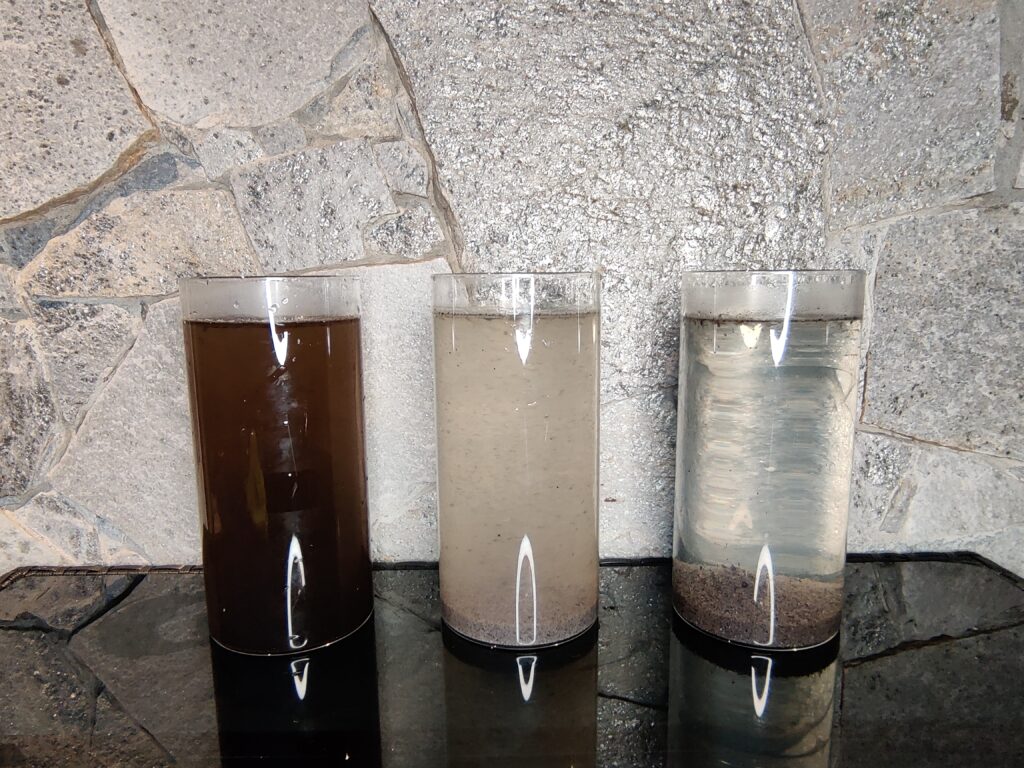
The fix is to treat the water where it collects and reuse it, rather than paying to import fresh water and paying again to discharge. TigerFloc is a natural flocculant that accelerates sediment settling by binding fine suspended particles into heavier flocs that drop out of the water column quickly. Once clarified, that treated water is ready for non-potable reuse on the same site.
How water is treated in Canada on active job sites
On active projects, how water is treated in Canada often means portable clarification rather than a fixed treatment plant. Turbid water is pumped through flocculant belts housed in layflat tubing, then directed into dewatering bags, where sediment is retained and clarified water is released. Crews can process water directly at the collection point, then reuse it for dust suppression, soil compaction, or equipment cleaning. For a step-by-step view of the process, see how TigerFloc works.
Proven turbidity and suspended-solids reduction
Performance is the reason teams adopt this approach. In testing, TigerFloc has reduced turbidity from about 500 NTU to 8 NTU within minutes and lowered suspended solids from roughly 200 PPM to 10-15 PPM, all with minimal dosage. It works across solids, hydrocarbons, metals, organics, and cement washout, which makes it suitable for a wide range of site conditions. Because water chemistry varies, jar testing is used to confirm the right dosage before full deployment. The product line covers multiple formats, so treatment can match the volume and layout of the job:
- The TigerFloc Water Treatment Kit for a ready-to-deploy setup.
- TigerFloc Flocculant Belts and Socks for inline clarification.
- TigerFloc Dewatering Bags for sediment capture.
- The full TigerFloc product range for belts, socks, tubes, and bulk flocculant agent.
Where the cost savings come from
Reusing treated water lowers project cost in three clear ways. First, it reduces the volume of fresh water a site has to purchase or truck in during peak demand. Second, it decreases the need for frequent discharge, which eases compliance management and reduces the paperwork and testing that come with it. Third, portable deployment adapts as site conditions and water volumes change, so treatment scales with the work instead of against it. To size an approach for your project, request a demo or review our water treatment solutions.
Industry use cases: Construction, Mining, and Oil Sands
On-site reuse of treated water fits any project that generates sediment-laden water and needs reliable non-potable supply. A few sectors see it most.
Construction and pipeline projects
Large linear projects produce steady runoff and demand consistent water for dust and compaction. TigerFloc has been used on a 300 km pipeline to treat more than one million liters of runoff, clarifying water fast enough to keep pace with the schedule. Reusing that treated water on-site reduces both freshwater purchases and discharge events. More examples are documented in our success cases.
Mining and reclamation
Mining and reclamation work frequently happens in eco-sensitive zones where turbidity control is scrutinized. A natural flocculant that settles solids quickly, without harsh additives, supports both reclamation goals and compliance. For related background, see our industry insights.
Oil sands and tailings ponds
Oil sands and tailings applications involve hydrocarbons and metals alongside suspended solids. Because TigerFloc acts on all three, it helps clarify water for reuse or controlled release within a broader sediment and environmental compliance strategy. The same approach extends to ponds and dugouts, agriculture runoff, stormwater management, and industrial process water cleanup, which is why contractors and environmental specialists across Canada rely on it.
Work with Floc Systems
Floc Systems Inc. is a Surrey, Canada water treatment company staffed by professional biologists and Qualified Environmental Professionals (QEPs). We help construction, industrial, and environmental teams clarify and reuse treated water on-site with TigerFloc natural flocculant products, available throughout Canada and the United States. Whether you are managing turbidity on a pipeline, a mine reclamation site, or a stormwater pond, our team can size a solution to your water volume and compliance targets. If you want to reduce freshwater demand and simplify discharge, reach out through our contact page and tell us about your project.
Frequently Asked Questions
It means capturing the sediment-laden water your site already produces, from runoff, dewatering, or process activity, then clarifying it with a flocculant and reusing that treated water for non-potable tasks such as dust control, compaction, and equipment washing. This lowers the volume of fresh water you need to buy or truck in during peak activity.
On active sites, water is usually treated with portable clarification rather than a fixed plant. A natural flocculant such as TigerFloc binds fine suspended particles into heavier flocs that settle quickly, and dewatering bags capture the sediment while releasing clarified water. You can see the full process in how TigerFloc works.
It can. Reusing treated water reduces how often you discharge to the environment, which lowers your exposure to the turbidity and suspended-solids limits that protect fish-bearing waters under the Wastewater Systems Effluent Regulations and provincial guidelines. Always confirm the requirements for your specific site and jurisdiction
On active sites, water is usually treated with portable clarification rather than a fixed plant. A natural flocculant such as TigerFloc binds fine suspended particles into heavier flocs that settle quickly, and dewatering bags capture the sediment while releasing clarified water. You can see the full process in how TigerFloc works.
TigerFloc is a natural flocculant designed for use near eco-sensitive areas and has been deployed on projects in sensitive zones. It targets solids, hydrocarbons, metals, organics, and cement washout, and our biologists and QEPs can advise on the right setup for your conditions.
TigerFloc products ship from Surrey, Canada and are available throughout Canada and the United States. You can view the full product range, request a demo, or contact our team for a project quote.
If you have questions about turbidity, sediment, or freshwater demand during your project's peak activity,
you may request a project quote from Floc Systems Inc., a water treatment company in Surrey, Canada.
Our team of professional biologists and QEPs helps size TigerFloc products and treatment solutions for projects across Canada and the United States.
RELATED ARTICLES
- 01. Optimizing Water Treatment: Understanding Dosage with TigerFloc Products

- 02. TigerFloc: Setting the Standard in Water Treatment – How It Differs From Competitors

- 03. Environmentally Responsible Disposal: A Guide to Handling Used TigerFloc Products

- 04. Introduction to Material Safety Data Sheets (MSDS) for TigerFloc Products

0 Comments